
Coupling hub receipt: reconcile unfinished bore scope
Determine whether a delivered coupling hub was ordered as a machining-stage component or a finished interface before accepting extra bore work.
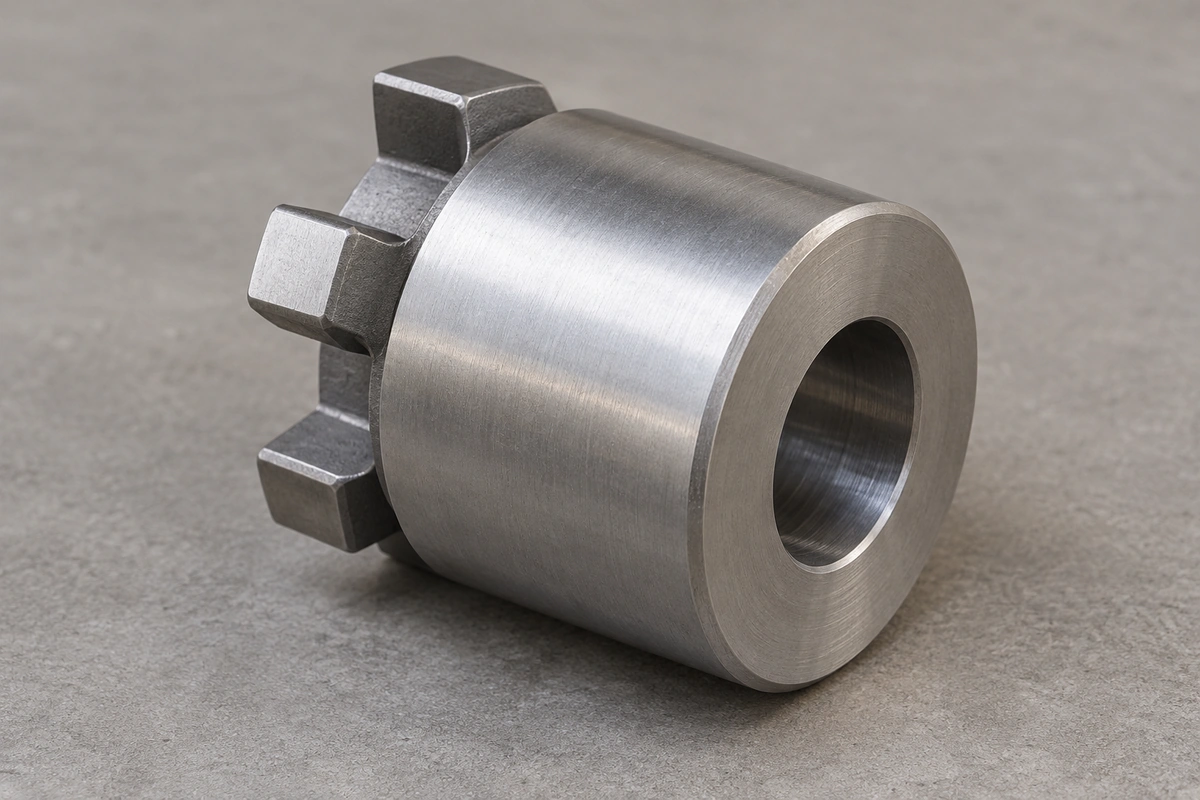
An unbored or pilot-bored coupling hub may be the correct commercial item for one order and an incomplete delivery for another. Resolve that supply-stage question before accepting a supplier’s suggestion to finish the bore locally. A missing finished interface should not quietly transfer machining work and responsibility to the buyer.
The decision is whether the delivered hub matches the agreed finishing scope. It is not a machining guide, a shaft-fit selection or approval to assemble the coupling.
Distinguish a component stage from a finished requirement
KTR’s ROTEX instructions explicitly discuss unbored and pilot-bored components supplied on request, and address responsibility for subsequent machining. They also identify bore, shaft, keyway and key dimensions for pre-assembly inspection. This supports keeping the delivered machining state distinct from a finished-interface claim. The manual’s specific terms do not define another supplier’s contract. KTR ROTEX instructions, sections 4.2–4.3, pages 12–13
Recover the accepted order description, hub designation and drawing. Ask whether the purchase covered a blank, pilot bore, finished bore, specified keyway and any other expressly included interface features. Keep each hub separate if the two sides have different requirements.
Find who accepted the finishing work
A final shaft drawing attached to an inquiry does not always establish that the supplier quoted all machining. Compare the quoted inclusions, exclusions and accepted amendments. If the scope was unclear, make that ambiguity explicit rather than assuming either free supplier work or automatic buyer responsibility.
Request the supplier’s declared as-delivered state and any agreed completion evidence. “Fits your shaft after machining” describes unfinished work or a proposed change, not confirmation of a finished delivery. A nominal bore label also does not establish the keyway or other specified features.
Where local finishing is proposed, ask for a separately scoped offer and responsible technical review before authorization. Retain the proposed provider, applicable component documentation, required outcome and evidence for review. This article supplies no permissible bore size, tooling instruction, heat treatment decision or re-machining method.
Supply-stage handover worksheet
| Field | Record required |
|---|---|
| Hub and side | Exact hub identity and motor/driven or other approved side reference |
| Ordered stage | Blank, pilot or finished state from the accepted scope |
| Included features | Bore, keyway and other explicitly ordered work, with drawing revision |
| Delivered state | Supplier declaration and attributable completion records |
| Remaining work | Specific unfulfilled or newly proposed operations, without instructions |
| Responsibility | Named provider, approval status and required handover evidence |
The worksheet prevents an available blank from becoming an accepted finished hub merely because both share a coupling family.
A fictional locally-finish-it proposal
A fictional order calls for a finished hub with an identified bore and keyway. The delivery record describes a pilot-bored hub, and the supplier offers a discount if the buyer completes it locally. The discount is a commercial proposal; it does not complete the order or authorize machining.
Record the supply-stage departure. Ask whether the supplier can provide the ordered finished component, or obtain a separately reviewed proposal for any alternative route. If the actual accepted order instead excluded finishing, document that conclusion and arrange the next work only through its authorized scope.
A later completion report must identify the particular hub and controlled requirement. Do not reuse a certificate from the original blank as evidence of later machining. Close the commercial finishing question and technical acceptance at their respective boundaries; neither alone approves the assembled coupling’s service duty.
Prepare a bounded supplier question
Use the Machined parts category and Spareparts sourcing request to identify the item and the unresolved question. Independent aftermarket or unbranded buying coordination does not establish manufacturer affiliation, original-equipment supply, inspection availability or technical approval. The manufacturer references above explain documentation; the fictional example is not a customer case.
The form supports a supported-marketplace HTTPS link, an 8–1200-character description, or screenshots. It accepts up to five PNG, JPEG, WebP or GIF images, at most 10 MiB each and 20 MiB combined. It does not accept PDF, CAD or ZIP uploads. Arrange other authorized technical files only through a separately agreed exchange.
Is a pilot-bored hub automatically a defective delivery?
No. Compare it with the agreed supply stage. It may be correct for a machining-stage order and incomplete for a finished-hub order.
Does a shaft drawing prove finishing was included in the price?
Check the accepted quotation and amendments. The drawing identifies a technical requirement, but the agreed supply and machining scope still need to be established.
Can a discount authorize local machining?
No. A price proposal does not define competent technical responsibility, work scope or acceptance evidence. Any changed route needs explicit approval.
Does a completed bore settle the whole hub interface?
Only the covered requirement is addressed. Keep specified keyway and other features, remaining evidence and coupling application acceptance separately visible.
Sources
Discuss a sourcing request related to this article.Coupling hub receipt: reconcile unfinished bore scope