
Wave-Spring Prototype Freight: Budget the Evaluation Sequence
Separate the first released prototype shipment from a later version that cannot be defined until its evaluation is complete.
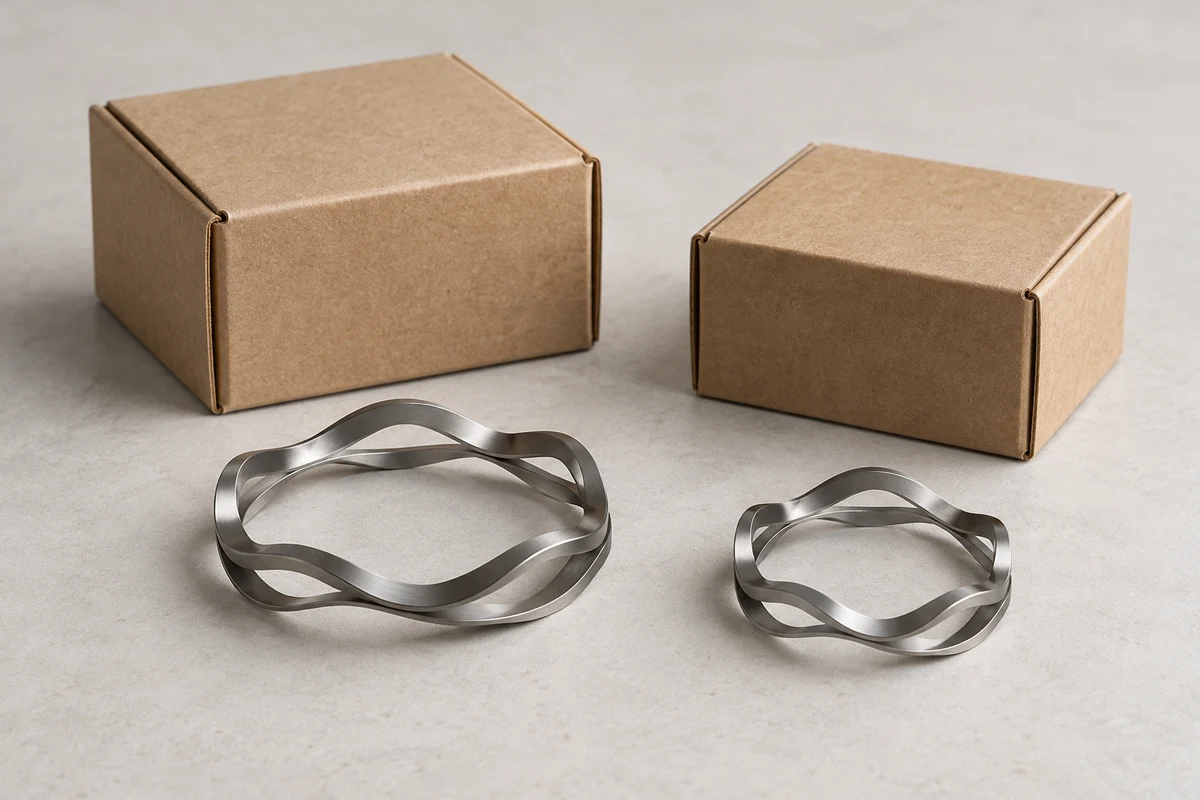
When a second custom wave-spring prototype depends on reviewing the first, a single combined-shipment budget may describe a shipment that cannot yet be defined. Establish which prototype references can be released independently and which require a later engineering decision before asking whether their transport can be combined.
This is a purchasing decision about the sequence of development movements. The technical owner defines the prototypes and their evaluation. A buyer should not order an unapproved alternative, skip a review or treat an estimated later revision as ready goods to make a freight comparison look simpler.
Identify the dependency behind the next prototype
Smalley's custom retaining-ring and wave-spring page, in its Cost Efficient section, describes evaluating one prototype and then adjusting dimensions for a second prototype. That is a named manufacturer's illustration of iterative development. It does not establish the number of iterations, acceptance, timing or transport price for another project.
Ask the responsible owner which question the first prototype must answer and what decision would permit a subsequent version. Record the current released reference and the person responsible for the next decision. The later version may be a possibility rather than a completed design; keep that distinction in the purchasing record.
Separate this sequence from two alternatives that have already been defined for an authorized comparison. Those alternatives might be available together under an actual supplier proposal. A dependent next version, whose requirements follow the first evaluation, has a different readiness condition. Only the responsible technical owner can say which description fits the project.
Give each movement its own release basis
For the first prototype, ask the supplier to identify the offered reference, quantity, supplied state and packing basis. Confirm the receiving party for the agreed evaluation and obtain a transport offer for that actual movement. A delivery to purchasing and a delivery to an external evaluator may be different destinations; do not choose between them by assuming who performs the work.
For a possible later prototype, record the condition that would make its quote meaningful. It may need a newly released drawing, a supplier response and a new packed-goods estimate. A provisional allowance can remain in the project budget, but label its assumptions and distinguish it from an approved purchase or booked collection.
Ask who can authorize each commercial step. Permission to obtain an estimate does not necessarily include permission to commission another prototype or buy its transport. Keep the engineering decision and the purchasing authorization linked without merging their responsibilities.
Compare feasible transport arrangements
Ask for a combined-shipment option only for references that can actually coexist as dispatchable goods under the approved development plan. If producing the next version requires evaluation of the first, holding the first at the supplier to await that undefined version would leave the stated prerequisite unmet. A lower hypothetical combined freight figure cannot resolve that dependency.
An alternative evaluation arrangement might change the sequence, but it needs a real proposal and approval from the relevant parties. Do not invent remote testing, a local laboratory or supplier evaluation capacity. The purchasing comparison should describe the accepted arrangement before assigning it a freight advantage.
Request the applicable package inputs and quote validity for each feasible movement. Ask whether the provider has any separately priced shipment-level services. Do not assume a fixed fee repeats, divide one bill across unknown iterations or add an invented development surcharge. Record the actual calculation basis when it is available.
A prototype-movement decision record
| Entry | First released prototype | Possible later version |
|---|---|---|
| Identity | Released reference and supplied state | New reference when actually released |
| Purpose | Authorized evaluation question | Decision arising from the earlier review |
| Readiness | Supplier's actual offer and packing basis | Named unresolved prerequisite |
| Recipient | Agreed evaluator or receiving party | Destination to reconfirm for that version |
| Spending | Approved goods and movement commitments | Labelled allowance or unapproved estimate |
| Next authority | Person recording the evaluation outcome | Separate technical and purchasing decisions |
This original worksheet supports correspondence. It is not a spring-design method, test plan or approval record supplied by Smalley. Leave the later identity blank when it has not been defined, with its prerequisite visible beside it.
Fictional example: the second version is not ready to combine
A fictional buyer has an offer for wave-spring prototype P-A. The technical owner will decide whether a revised version is needed after its authorized evaluation. Purchasing asks for one courier shipment containing P-A and “the final prototype” to reduce the number of movements.
The supplier has no released definition for that later item. The buyer therefore prices P-A's actual movement and keeps a possible subsequent movement as a conditional budget branch. It does not request manufacture of a guessed revision or declare two shipments inevitable. The evaluation might produce a different next decision.
If a later reference P-B is authorized, the buyer obtains its own goods and transport scope before commitment. Earlier spending remains in the development cost record, while the new decision shows only the additional proposed commitment. No actual customer, savings amount, prototype outcome or supplier capability is represented by this example.
Close a stage without closing the whole project
After the first movement, retain the shipped reference, actual cost and the authorized evaluation disposition separately. Delivery proves neither that the prototype passed nor that production can proceed. If the development plan stops, do not keep an unneeded later shipment in the committed-spend total. If it changes, retain the previous estimate so the reason for the revised budget is traceable.
See Spareparts product context for the buying category. Use the Spareparts sourcing enquiry to describe the released item and the unresolved purchasing question. Spareparts provides independent aftermarket and unbranded buying coordination and supplier negotiation. The named manufacturer is a documentary example, not an affiliation or a claim that Spareparts supplies its products, development programme or engineering services.
Frequently asked questions
Can I combine successive wave-spring prototypes in one shipment?
Only when the approved development plan and actual supplier offer make the references available together. If the later version depends on evaluating the first, do not assume both can be defined and dispatched at the same time. Ask the technical owner to establish the dependency before comparing freight.
Does the cited manufacturer promise exactly two prototypes?
No. The source illustrates an initial prototype followed by an adjusted version; it does not fix the iteration count for your project. Keep possible later movements conditional and use the actual provider offer for availability, scope and price.
How should I budget freight before the next prototype is defined?
Keep a separately labelled allowance or estimate with its assumptions and prerequisite. Do not present it as booked transport or an approved purchase. Once the next reference and packing basis are available, obtain the applicable quote and spending authorization.
Does delivery of the first prototype authorize the next version or production?
No. Record delivery, the authorized evaluation outcome and the next purchasing decision separately. The responsible technical owner determines what the result supports; a transport record does not approve a design change or release production.
Sources
Discuss a sourcing request related to this article.Wave-Spring Prototype Freight: Budget the Evaluation Sequence