
Metal expansion-joint RFQ: preserve the thrust-restraint arrangement
Distinguish tied and untied metal expansion-joint proposals and identify who reviews the pressure-thrust restraint and movement requirements.
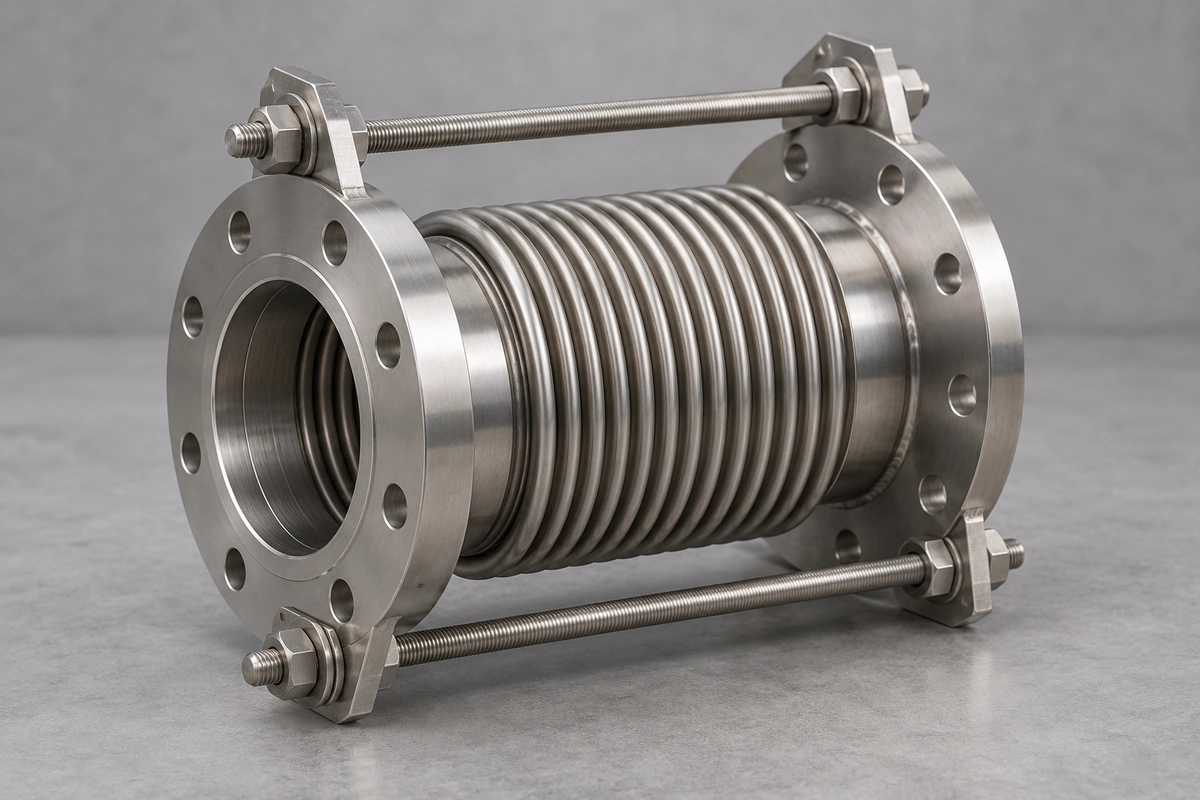
A metal expansion joint with matching end connections can still represent a different system proposal. The RFQ must identify whether the replacement preserves the approved pressure-thrust restraint arrangement, including the role and supply scope of the relevant hardware.
Do not reduce the requirement to diameter, length and a pressure figure. Those fields may help identify a candidate, but they do not answer how the proposed joint relates to the piping system's approved movement and restraint design.
Make tied or untied a documented field
EagleBurgmann describes its AN type as a tied metal expansion joint whose hardware retains pressure thrust. Its AX type is described as untied and mainly intended for axial movement. These named examples demonstrate a design distinction; they do not establish that either type is suitable for an unidentified line. EagleBurgmann metal expansion-joint entries
Ask the supplier to identify the exact proposed design and supporting drawing. A visible rod or external structure in a photograph should not be assigned a function by a purchaser. Request the manufacturer's component description and the responsible piping engineer's interpretation of the installed arrangement.
If the existing record does not identify the restraint basis, keep it unresolved. A new quote cannot silently supply the missing system design merely by describing the joint as flexible or heavy duty.
Anchor the inquiry to the approved system record
Collect the existing joint identifier, drawing revision and the piping or equipment record governing its replacement. Include documented design conditions and movement requirements supplied by the responsible technical owner. Do not derive movement allowances from available space or copy maximum values from a product family.
Ask whether the requested replacement is an exact documented item, a supported successor or a proposed redesign. A change between tied and untied arrangements belongs in the redesign discussion even if several dimensions match. The system owner must determine the implications for the rest of the installation.
Keep application assumptions attached to their source. If a supplier needs additional line or support information, record the request and its owner rather than allowing a commercial deadline to turn an estimate into an approved input.
Define the hardware supply boundary
The quotation should identify which restraint-related components belong to the proposed joint assembly and which existing system components it assumes will remain. Use the actual drawing terminology. Ask for included items and exclusions without prescribing hardware size, anchor details or a mounting method.
Where a proposal relies on retained components, name the party responsible for their assessment. A supplier may quote a joint without accepting responsibility for the complete piping system. That limitation is material to procurement and should be visible before the buyer treats the price as a complete replacement solution.
Movement requirements, restraint function and pressure qualification also need consistent documentation. A statement that one field matches does not close the others. Ask the engineer to review the exact configuration under the applicable project requirements.
A fictional lower quote that removes a design feature
Suppose the released drawing identifies a tied assembly. Offer A references that arrangement. Offer B lists matching connection dimensions but describes an untied joint and omits the associated hardware.
B is not simply a cheaper version of the specified item. Ask the supplier to quote against the required arrangement or identify its offer as a separate design change. Refer the change to the system engineer; do not approve it because the bellows looks similar. This example makes no claim about actual costs, loads or suitability.
Use a restraint-scope worksheet
| Record field | What the buyer should preserve |
|---|---|
| Existing joint drawing | Exact joint identity, revision and governing system record |
| Tied or untied design | Required and proposed design with manufacturer documentation |
| Approved movement basis | Project movement requirements and source, not catalogue maxima adopted as duty |
| Restraint hardware scope | Included hardware and explicitly assumed retained system components |
| System review reference | Responsible piping engineer and applicable assessment record |
| Deviation disposition | Like-for-like response, unresolved assumption or separate redesign proposal |
The completed worksheet should distinguish supplier confirmation from engineering acceptance. Retain the exact drawing accepted by the system owner; a later change of hardware or movement basis reopens the decision.
Request a reviewable replacement
“Please quote against the existing joint and system references. State the proposed tied or untied design, the restraint hardware included and every assumption about retained system components. Respond to the approved movement and duty requirements, and identify deviations separately for the responsible engineer.”
The machined-parts sourcing category and spare-parts inquiry can organize the commercial request. Piping stress analysis, anchor sizing, pressure qualification and installation approval require their own competent technical scope. This article provides no calculations or repair instructions.
The inquiry image field accepts up to five PNG, JPEG, WebP or GIF files, no more than 10 MiB each and 20 MiB combined. A supported marketplace link, a short description or screenshots can start the request. It is not a PDF, CAD or ZIP upload field; arrange other technical files through a separately agreed, authorized exchange.
Do matching flanges make metal expansion joints interchangeable?
No. The exact restraint arrangement, movement requirements, duty and system responsibilities still need review.
Can I identify a tied joint just by seeing rods in a photograph?
Do not assign component functions from appearance alone. Request the manufacturer’s drawing and have the piping reviewer confirm the arrangement.
Is an untied alternative just a missing-hardware quotation?
It can represent a changed system design. Keep it as an explicit alternative for the responsible engineer rather than accepting it as the original requirement.
Does this RFQ establish anchor loads or allowable movement?
No. Those inputs and assessments must come from the approved system design and competent engineering work.
Sources
Discuss a sourcing request related to this article.Metal expansion-joint RFQ: preserve the thrust-restraint arrangement