
Retaining Ring Orders: Budget the Actual Installment Shipment Plan
Price the actual retaining-ring release schedule before budgeting one parcel for the entire order.
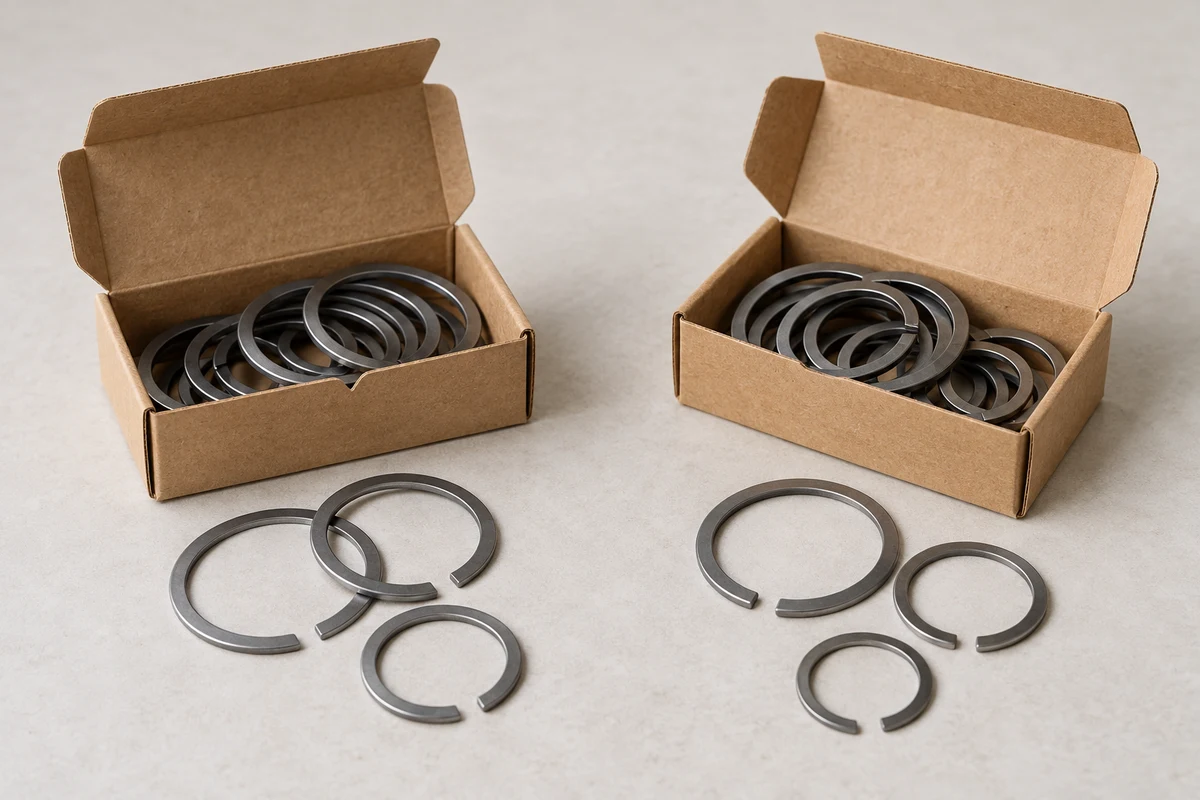
A retaining-ring order can be one commercial purchase and several physical dispatches. Before approving a freight budget, connect the accepted release schedule to the number of movements actually proposed. Small parts do not guarantee a single parcel or a single receiving event.
The question is contractual installment release, not a reason to split regulated goods or evade transport requirements. Start with the approved ring references and actual order arrangement, then price the movements the supplier and logistics provider can support.
Check the current order rather than an assumed parcel count
Section 4 of Smalley's US terms carrying the December 2014 issue identifier permits installment shipments. The document was accessible during this authoring review, but its historical issue date must remain explicit. It is not evidence that every current order uses the same provision or has a particular split-shipment fee.
Ask the actual seller which terms and release schedule apply to the purchase. Identify whether quantities will be released together, in planned installments or under a still-unresolved arrangement. Preserve the seller's response with the order rather than inferring it from total quantity.
Keep the proposed schedule distinct from a dispatch confirmation. A planned release is a basis for a quote; it does not prove the goods have been produced, packed or collected.
Attach quantities and packed states to releases
For each proposed release, record the approved part reference, quantity, origin and recipient. Ask for the packing information needed by the actual service provider. Do not divide a full-order carton estimate proportionally and assume every partial shipment has the same utilization.
If multiple ring references share a release, keep their identities visible. A common parcel does not authorize substitution or erase the requirement to reconcile quantities by order line. Conversely, multiple deliveries should not be counted as multiple purchases of the same ring population.
Ask the receiver how the actual installments will be recorded against the open order. This is an administrative reconciliation question, not an instruction to inspect or install the rings. The completed first delivery must reduce the remaining quantity without causing the next dispatch to look like a duplicate order.
Ask which charges repeat
Have the logistics provider identify the calculation basis for each movement. Some quoted services may be tied to a shipment or event, while others depend on the actual package inputs. Use its real offer; do not presume a minimum, documentation fee or receiving charge applies.
Compare the sum of confirmed release costs with any alternative only after the seller accepts that alternative. A request to combine releases may change stock holding, timing or another order condition. Do not assume the supplier will retain ready goods without consequence or that consolidation is automatically available.
The buyer may need the first release before the rest. Keep that useful timing difference beside the totals instead of choosing a lower combined subtotal that fails the actual requirement.
Installment movement worksheet
| Entry | Evidence to retain |
|---|---|
| Order basis | Current accepted terms and approved ring references |
| Release plan | Actual proposed quantities and sequence |
| Packing per release | Supplier-provided package record or labelled estimate |
| Charges per movement | Provider's scope and actual calculation basis |
| Receiving record | Order-line reconciliation owner and remaining quantity |
| Combined alternative | Seller-accepted proposal and changed conditions |
| Decision | Cost comparison with timing and unresolved inputs visible |
This is an original purchasing worksheet. It does not prescribe transport classification, packing methods or supplier storage obligations.
Fictional example: two releases were priced as one
A fictional buyer orders 600 approved rings, with a proposed first release of 200 and a later release of 400. These quantities are invented solely to illustrate the record. Its budget contains a single quote for all 600 packed together.
The buyer obtains separate packed inputs and movement offers for the two actual releases. It also asks whether a combined release is available under acceptable conditions. If the supplier cannot offer that alternative or the first quantity is needed earlier, the one-parcel estimate is not a valid substitute for the required plan.
When the first dispatch occurs, the buyer updates the shipped and remaining quantities without overwriting the original plan. A changed second release returns to the provider for a revised quote where needed. The result is a budget for the actual installment journey, without a fabricated consolidation saving or delivery promise.
Bring a defined question to the supplier
See Spareparts product context for the relevant buying category. Use the Spareparts sourcing enquiry to describe the exact item and unresolved commercial question. Spareparts provides independent aftermarket and unbranded buying coordination and supplier negotiation. The named manufacturers are documentary examples, not affiliations or a claim that Spareparts supplies their branded products or services.
Frequently asked questions
Does one order number mean one shipment?
No. Obtain the actual release arrangement and map each proposed movement to quantities and packing. An order total alone cannot establish parcel count.
Can I use the full-order freight quote for each installment?
Only if the provider expressly confirms that scope. Obtain the relevant packed inputs and charges for the actual partial releases rather than dividing or duplicating an unrelated total.
Are the historical Smalley terms a current policy guarantee?
No. The cited document carries a December 2014 issue identifier. Verify the actual terms governing the present order and retain any supplier acknowledgement.
Should I always ask the supplier to consolidate?
It is an option to discuss, not an assumed entitlement. Compare only an accepted alternative and keep needed release timing and any changed conditions visible.
Sources
Discuss a sourcing request related to this article.Retaining Ring Orders: Budget the Actual Installment Shipment Plan