
Coupling spider receipt: review reported storage exposure
Keep a coupling spider’s documented storage exposure separate from its material identity and calendar age when requesting a qualified receipt decision.
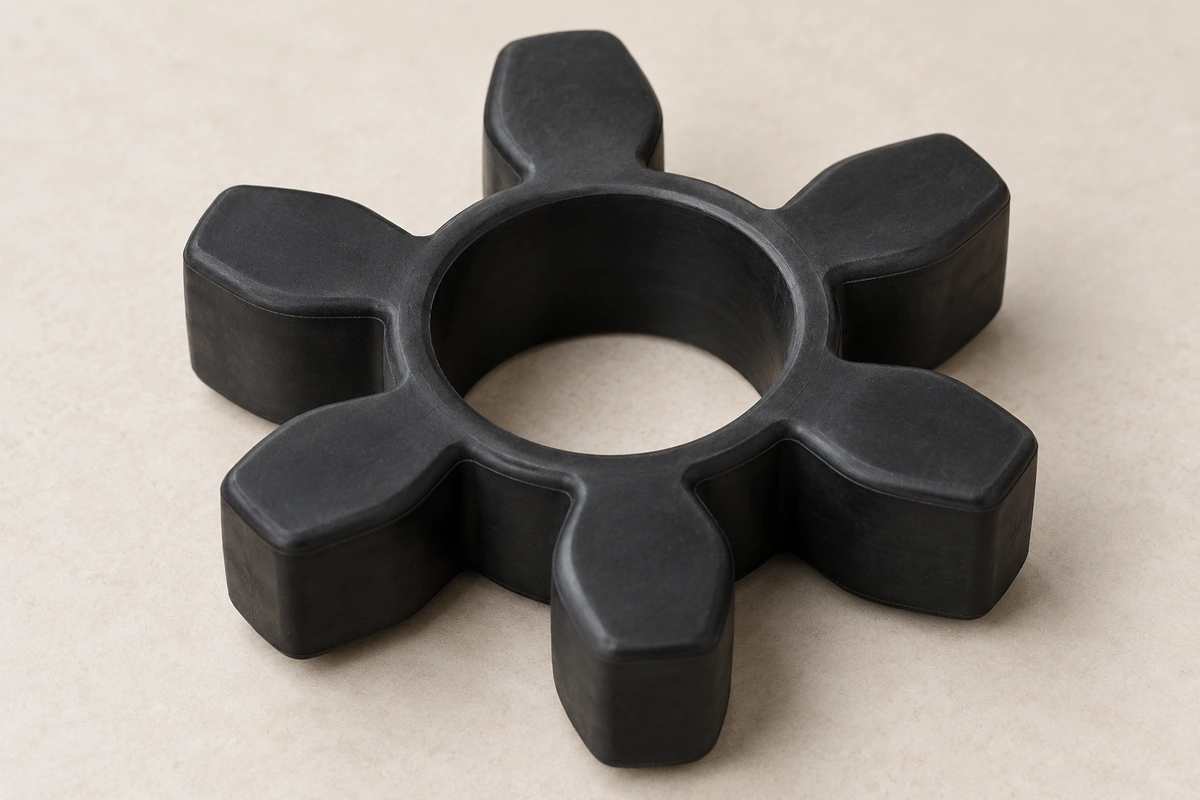
A coupling spider can match the ordered material and hardness while carrying an unresolved storage-exposure history. If the supplier reports condensation or storage near a possible ozone source, matching the part number does not answer that concern. Ask for a disposition addressing the actual exposure record and identified element.
This is a review of a reported event, not a universal shelf-life calculation or a reason to replace every older spare. No actual damaged spider or storage assessment is represented here.
Use the manual for the named product
KTR’s ROTEX instructions 40210 EN, edition 27, distinguish storage provisions for hubs and elastomer spiders. The storage section addresses humid conditions, condensation and ozone-generating devices. These are named-product precautions, not a generic expiration date for all coupling inserts. KTR ROTEX instructions, section 3.1, page 10
Identify the actual coupling family and spider variant before selecting the applicable guidance. Do not borrow a storage statement for a metal hub to clear an elastomer element. Likewise, a different maker’s visually similar insert needs its own relevant response.
Describe the exposure without diagnosing its effect
Request the known period, location, packaging condition and source of the report. Separate a recorded condensation event from a general claim that a room was humid. If equipment near the stock is described as a possible ozone source, retain that description and ask the responsible provider what can be established. Do not calculate an exposure dose from proximity or assign damage from a room photograph.
Unknown duration remains unknown. A dispatch date cannot establish when an exposure began. Ask which received elements were in the affected storage group and whether other groups were stored separately. Do not copy one history across stock merely because the items share a part number.
Record available condition observations separately from history. An intact-looking spider does not settle an exposure question, and a missing history record does not itself prove degradation. No squeezing, bending, hardness testing or trial operation is requested by this administrative review.
Exposure-to-element worksheet
| Field | Product-specific question |
|---|---|
| Element identity | Which spider variant and coupling family are affected? |
| Applicable guidance | Which maker document and issue apply to that element? |
| Reported event | Condensation, possible ozone source or other stated exposure, with original wording |
| History coverage | Known period, package state and affected storage group |
| Existing observations | Attributable condition records, without inferred internal damage |
| Disposition | Qualified response to this history, limitations and unresolved prerequisites |
The question for the technical owner is whether the event leaves the particular received elements suitable for the intended next step. Purchasing should not replace that question with an age cutoff simply because dates are easier to compare.
A fictional identity match with an exposure gap
A fictional supplier confirms the exact ordered spider but also reports a damp storage interval. Its next reply attaches the correct hardness designation and says the element is unused. The identity evidence is useful; neither fact addresses the reported interval.
Ask for the actual history available and a manufacturer or qualified provider response covering that element and concern. If the provider says the evidence is insufficient, retain that limitation and agree the next authorized assessment or commercial option. A new assessment is not automatically included in a parts purchase.
If replacement is agreed, obtain the replacement’s own identification and relevant history. Do not use a later manufacture date as the entire remedy. Record the exposure decision separately from material identity, receipt quantity and subsequent coupling installation approval.
Prepare a bounded supplier question
Use the Machined parts category and Spareparts sourcing request to identify the item and the unresolved question. Independent aftermarket or unbranded buying coordination does not establish manufacturer affiliation, original-equipment supply, inspection availability or technical approval. The manufacturer references above explain documentation; the fictional example is not a customer case.
The form supports a supported-marketplace HTTPS link, an 8–1200-character description, or screenshots. It accepts up to five PNG, JPEG, WebP or GIF images, at most 10 MiB each and 20 MiB combined. It does not accept PDF, CAD or ZIP uploads. Arrange other authorized technical files only through a separately agreed exchange.
Does the correct spider hardness close a storage concern?
No. Hardness identity answers a variant question. A reported exposure needs a response addressing the identified element and its actual history.
Can a hub storage statement be applied to the spider?
Do not transfer it automatically. The cited ROTEX manual distinguishes component storage provisions; use the applicable guidance for the elastomer element.
Does a possible ozone source prove the spider is damaged?
No. Preserve the reported source, period and evidence limits, then obtain an appropriate assessment. Proximity alone is not a quantified exposure or diagnosis.
Is a newer replacement automatically acceptable?
Its date does not establish its history or condition. Keep the replacement’s evidence and qualified disposition separate from the original stock’s record.
Sources
Discuss a sourcing request related to this article.Coupling spider receipt: review reported storage exposure