
Coupling-spider RFQ: specify material, hardness and scale
Identify the exact coupling-spider material and hardness variant, using manufacturer-specific coding rather than color or a harder-is-better assumption.
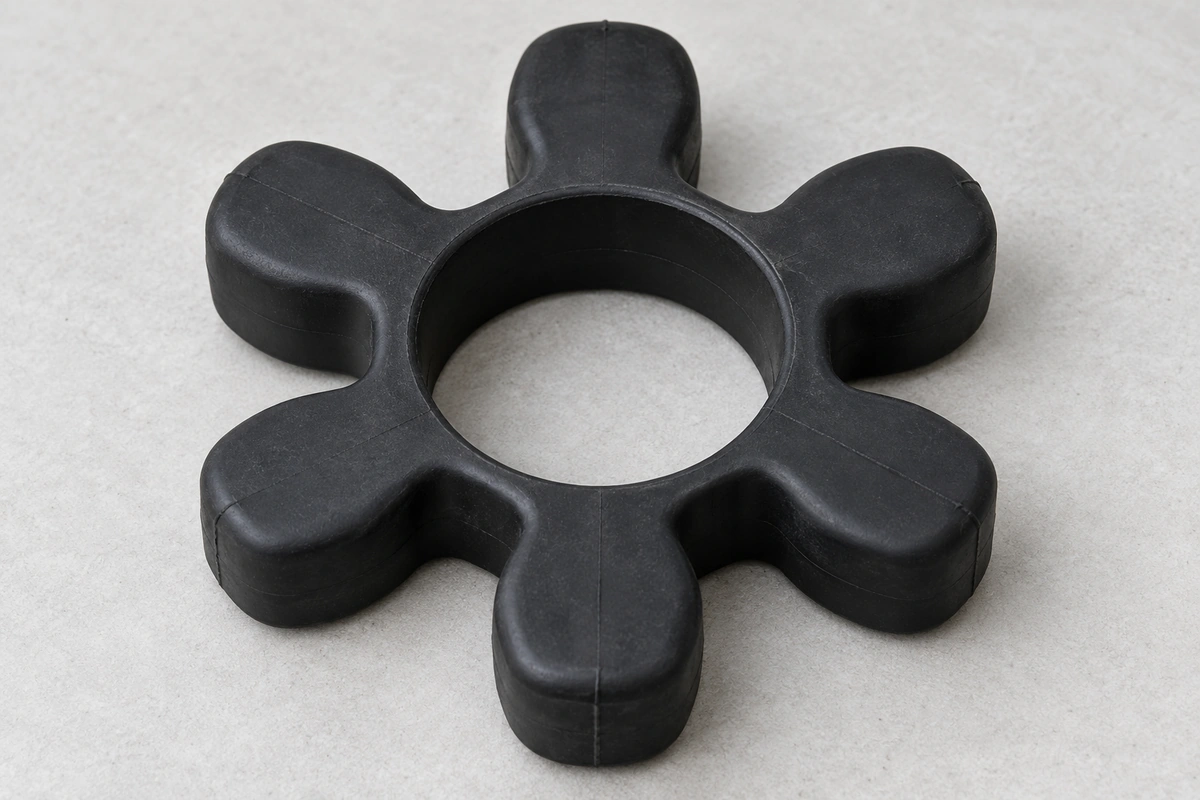
An elastomer coupling spider can have the right general shape while leaving its material and hardness variant unresolved. A replacement RFQ should preserve the coupling family, size, exact spider designation, material identity and hardness scale from the approved record.
A harder element is not automatically an upgrade. The buyer needs a documented replacement decision for the existing coupling, rather than a seller's general promise of stronger rubber.
Hardness belongs to a defined product variant
KTR's ROTEX Standard page describes spiders with different hardness levels and relates those options to damping and torsional stiffness. This establishes that hardness is a functional product distinction in that family, not merely a color or cosmetic option. It does not approve a particular hardness for the reader's machine. KTR ROTEX Standard
Use the exact manufacturer's documentation to decode any color or material code. Do not transfer one maker's color scheme to another brand or to an unbranded part. A photograph can support identification but cannot establish the compound, hardness or authenticity of the offered element.
Record the hardness value together with its scale as stated in the specification. A bare number is incomplete; do not perform an informal cross-scale conversion to make a seller's answer appear to match.
Identify the installed coupling before the loose insert
Collect the coupling maker, family, size and relevant hub or assembly references from approved records. Keep the spider designation linked to that coupling instead of ordering a standalone shape with an estimated diameter.
If the original element has degraded or changed shape, record it as as-found evidence rather than a new dimensional specification. Ask the technical owner to resolve any conflict between the removed item and the machine's approved coupling record.
Clarify whether the requirement is one replacement spider, a defined spare kit or a complete coupling. A photo of two hubs and an insert does not establish what the quoted price includes. Do not accidentally reopen the whole coupling selection when the authorized scope is a documented element replacement.
Compare material and hardness together
Ask the supplier for the exact offered designation, manufacturer material description, hardness and scale, plus the document identifying that variant. Where a proprietary material name appears, preserve it instead of replacing it with the generic word polyurethane or rubber without justification.
A claimed hardness match is not the whole material comparison. If the supplier proposes a different compound or product family, retain that difference and request the relevant application evidence for review. The buyer should not infer damping, temperature behavior or service life from a hardness number alone.
Keep application questions with the machine or coupling specialist. If the current element failed, purchasing a replacement and investigating the cause are different tasks. A harder spider should not be proposed as an automatic remedy for an unresolved machine condition.
A fictional same-color substitution
A buyer requests the approved spider designation. Offer A shows an insert in the expected color but supplies no material or hardness document. Offer B provides an identified variant with a different hardness and calls it an upgrade.
Ask A for the exact designation and manufacturer-specific coding evidence. Treat B as a changed variant requiring technical review, not an improved version already approved by the word upgrade. The example makes no claim about real product color, hardness values or successful replacement.
Use a variant-control worksheet
| Record field | What the buyer should preserve |
|---|---|
| Coupling family and size | Approved coupling identity and relevant assembly or hub references |
| Spider designation | Exact required and offered element code, separate from a generic listing title |
| Material identity | Manufacturer’s documented compound or material variant, with differences preserved |
| Hardness and scale | Specified and offered value plus scale; no inferred conversion |
| Manufacturer coding source | Relevant product document defining any color or code for that family |
| Substitution approval | Decision on changed material or hardness, tied to the actual offered element |
The final order should name the approved element explicitly. If a seller later substitutes another color, material or hardness under the same listing title, reconcile the actual designation and evidence before accepting the change.
Request the specified element, with alternatives separate
“Please quote the spider identified for our documented coupling family and size. Confirm exact designation, material, hardness value and scale using the relevant manufacturer document. State the supplied quantity and whether hubs or other items are included. List any different compound or hardness as a separate proposal.”
The machined-parts sourcing category and spare-parts inquiry provide the purchasing route. Manufacturer examples here are documentation references, not an assertion that an independent buying service is affiliated with the brand or offers original-equipment goods. Coupling application and substitution approval remain with the responsible technical owner.
The inquiry image field accepts up to five PNG, JPEG, WebP or GIF files, no more than 10 MiB each and 20 MiB combined. A supported marketplace link, a short description or screenshots can start the request. It is not a PDF, CAD or ZIP upload field; arrange other technical files through a separately agreed, authorized exchange.
Can I order a coupling spider by color alone?
No. Color meanings are manufacturer- and product-specific. Request the exact designation, material and hardness documentation.
Is a harder spider a better replacement?
Not automatically. Hardness affects the documented coupling behavior, and the responsible specialist must review any change against the application.
Why must the hardness scale be included?
The value is incomplete without its stated scale. Preserve the original specification and ask for a matching documented response rather than making an informal conversion.
Does replacing the spider resolve the cause of its failure?
That cannot be concluded from a parts order. Keep replacement identity separate from any required investigation of the machine or coupling condition.
Sources
Discuss a sourcing request related to this article.Coupling-spider RFQ: specify material, hardness and scale